
Things to Do in Ouagadougou in May
May weather, activities, events & insider tips
Low Season · Budget Friendly
May Weather in Ouagadougou
Long-run averages for May
101°F (38°C)
High Temp
80°F (27°C)
Low Temp
2.7 inches (69 mm)
Rainfall
48%
Humidity
11
Sunny-Day UV
⚠ Pre-rain dust storms, locally called haboobs, can sweep through Ouagadougou with as little as ten minutes warning in May, reducing visibility to a few meters and filling the air with fine red laterite particles. When you see the horizon turn brown and the wind pick up suddenly, get indoors immediately and cover your mouth and nose. They pass in 20 to 40 minutes but can strand you if you are mid-transit.
⚠ Extreme heat between 10am and 4pm reaches sustained levels above 38°C (101°F) with little shade available on many streets. Heat exhaustion and heatstroke are real risks for visitors unaccustomed to Sahelian temperatures. Carry water at all times, minimum 2 liters (0.5 gallons) per outing, and retreat indoors during peak hours.
⚠ Mosquito populations begin rising sharply as the first rains create standing water in late May. Ouagadougou is in an active malaria transmission zone. Begin antimalarial prophylaxis before arrival as advised by a travel health specialist, and use insect repellent and bed nets consistently, after dusk.
Is May Right for You?
Weigh the advantages and considerations before booking
Advantages
- + May is mango season in Ouagadougou. Amélie, Brooks, and Kent varieties overflow every roadside stand. The warm evening air carries the sweet, resinous scent of overripe fruit. The mangoes alone justify the timing. First showers coax fresh green growth across the Sahelian landscape. The khaki dust of dry months finally softens.
- + Tourist numbers hit their annual low. You might be the only foreigner at the Moro-Naba Palace ceremony on a Friday. You could wander the bronze-casting workshops alone. This place does not perform for cameras. Market conversations move at their own pace. Locals are not used to being watched. That changes everything.
- + First rains arrive in late May. The transformation is immediate. Months of red laterite dust vanish from every surface, every leaf, every parked moped. Petrichor rises from sun-cracked Sahelian earth. The scent stays with you for years. Sharp. Mineral. Wet. Nothing like temperate climates.
- + Accommodation rates bottom out in May. Deep off-season. Negotiating power shifts to you. Properties serving NGO workers and diplomatic staff have availability. They are more flexible now than any other time. This is your window.
Considerations
- − The heat is real. Average highs hit 38°C (101°F). Ouagadougou radiates from every surface. Concrete. Laterite roads. Corrugated iron roofs pop and tick as they expand. Between 10am and 4pm, outdoor activity ranges from uncomfortable to dangerous. The city shuts down. Visitors find the rhythm strange at first. Plan accordingly.
- − Burkina Faso has seen significant instability. Government changes. Security concerns in provinces outside the capital. Ouagadougou itself is calmer. But situations evolve. Check your government's travel advisory. Carry documentation copies. Register with your embassy if present. Plan carefully. Stay informed. Do not dismiss the destination.
- − Before rains establish, massive dust storms strike. Little warning. Walls of red-brown dust rise 30 m (100 ft). Visibility drops to arm's length. Fine grit fills every unprotected space. They pass in 20 to 40 minutes. You will be stranded wherever you stand. Seek shelter immediately.
Best Activities in May
Top things to do during your visit
Moro-Naba Palace Friday Morning Ceremony
Every Friday around 7am, the Moro-Naba performs his ceremony. The traditional Mossi king gathers at his Dapoya palace. Centuries of repetition. Balafon and dundun drums fill the courtyard. Horsemen assemble in robes that seem too heavy for the heat. The 45-minute ritual reenacts a legendary departure and return. No ticket counter. No ropes. Stand among courtiers and locals. Guards will likely guide you if you look lost. May mornings hover around 27°C (80°F). Far more comfortable than March or April. Arrive before 6:45am. Secure your sightline to the horsemen's entrance.
Booking Tip: No booking required. Public ceremony. Arrive by 6:45am any Friday. Dress modestly. Cover shoulders and knees. Ask before photographing anyone. The palace sits in Dapoya. Short taxi from center. See below for guided tours with context and translation.
Laongo Granite Sculpture Symposium Site
30 km (19 miles) east lies a granite wonder. International artists have carved here since 1989. Massive faces. Abstract forms. Animal figures emerge from pink-grey stone. Flat Sahelian scrubland surrounds them. In May, dry grass turns gold. Morning light throws sharp shadows across the carvings. Best month for photography. Green season softens everything later. The site is open and unattended. Wander at your own pace. Touch chisel marks from Senegal, Italy, Burkina Faso, Japan. Leave before 7am. Two comfortable hours before heat returns. The laterite road holds in May. Late-month rains can muddy sections. Hire a driver who knows the way.
Booking Tip: Book through a licensed operator. Five days ahead minimum. No facilities on site. Carry 3 liters (0.8 gallons) water per person. Confirm current road conditions with your driver. See below for available day excursions from Ouagadougou.
Bangr-Weoogo Urban Park Dawn Walks
Bangr-Weoogo Park sits on Ouagadougou's western edge, a 260-hectare (640-acre) forest reserve that preserves what the Sahel looked like before concrete swallowed the capital. May brings the first rains. New growth emerges on acacia and shea trees. The dawn chorus of weaver birds and bulbuls begins around 5:30am. At that hour, the air stays cool enough, roughly 27°C (80°F), to walk without strain. Light filters through the canopy with a soft green quality that vanishes once the sun climbs higher. Monitor lizards bask on fallen logs. Stay quiet, and green monkeys may appear in the upper branches. The park also holds a small museum of Mossi cultural artifacts and a sacred grove still used for traditional ceremonies. By 9am, temperatures rise and shade thins. Treat this as a 5:30 to 8:30am activity. You will find one of Ouagadougou's most restorative experiences.
Booking Tip: Entry fees at the gate are modest. Guided walks with naturalists who identify bird species and explain traditional tree uses are available. Book at least one day ahead through your accommodation or a local guide service. Check the booking section below for nature-focused tour options.
Artisan Quarter Bronze-Casting Workshops
South of the Grand Marché, along unpaved lanes where charcoal smoke and hot metal hang in the air, Ouagadougou's bronze casters work with lost-wax techniques that predate French colonization. In May, workshops run through cooler morning hours. Foundry fires cast an orange glow even in daylight. The heat is impressive. You can watch the entire process: wax models shaped by hand, clay molds built layer by layer, molten bronze poured from crucibles heated over open charcoal pits where heat shimmers visibly even at 7am. These artisans are families who have cast for generations. Most will explain their craft if you approach with patience and a greeting in Mooré. Finished pieces range from thumb-sized Mossi horsemen to full-size masks. They rest on rough wooden tables beside molds, still warm. This is not curated tourism. It is an active production quarter where your presence remains secondary to the work.
Booking Tip: No formal booking is necessary. Hiring a local guide who makes introductions and translates between French and Mooré enriches the experience significantly. Arrange this through your accommodation. These are working artisans, not performers. A respectful approach matters more than a camera. See the booking section for guided artisan-quarter tours.
Evening Maquis and Street Food Circuit
Ouagadougou's food scene follows one rule: everything worth eating happens after dark. By 6pm, as the sun drops and temperatures retreat from daily peaks, the city's maquis fire up. These open-air restaurants sit shaded by straw awnings and neem trees. Smoke carries the unmistakable scent of poulet bicyclette, the free-range grilled chicken that defines Ouagadougou. The name recalls vendors who once delivered live birds by bicycle. The birds are leaner and more flavorful than factory-farmed equivalents. Skin chars and crackles. Meat comes dressed with sharp onion-mustard sauce and attieke, fermented cassava couscous with a slightly sour tang. Nearby, brochette vendors turn skewers of beef and mutton over glowing coals. The dolodromes, traditional bars in Dapoya and Gounghin quarters, serve dolo, a slightly sour millet beer, in calabash gourds. The texture is grainy. The taste is tart and earthy. Plastic chairs pull into circles under the stars. This is where Ouagadougou's real nightlife lives. Zone du Bois hosts the contemporary bar scene, with live music on weekends and cold Flag and Brakina beer sweating in humid May evening air.
Booking Tip: No booking needed for maquis or dolodromes. Simply arrive after 6pm. For a structured introduction with context and safe navigation, arrange an evening food walk through a local cultural guide at least two days ahead. Check the booking section below for guided food experiences.
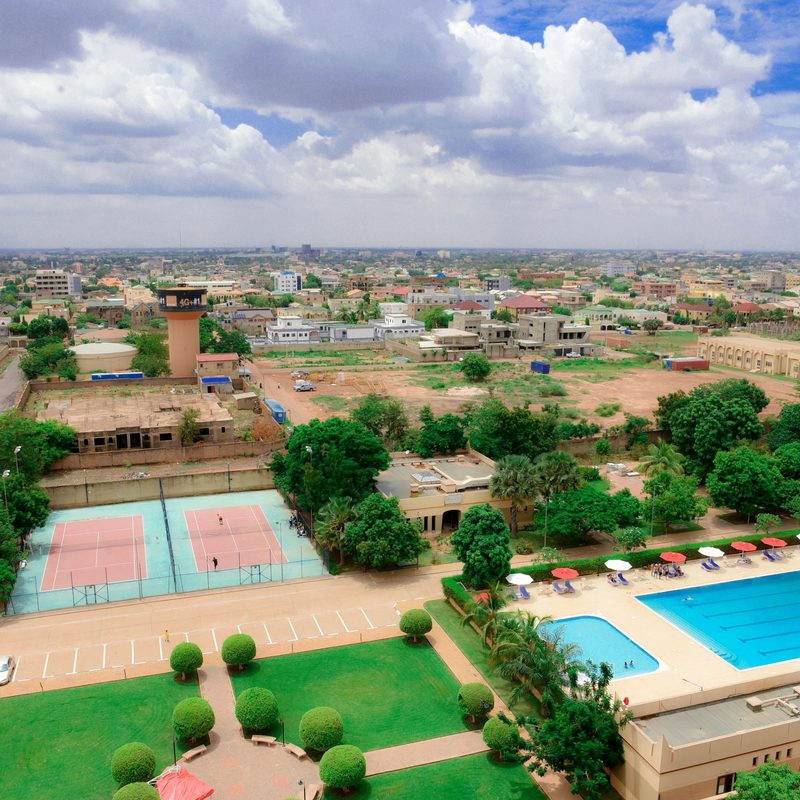
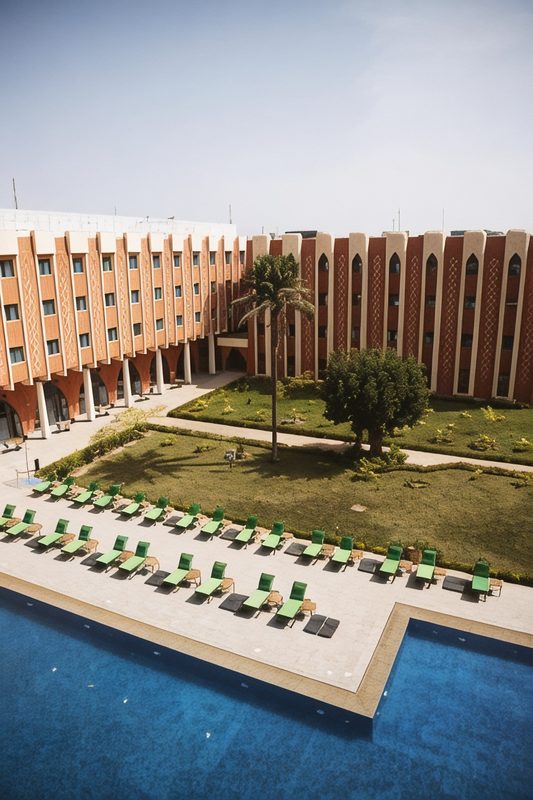
Where to Stay in Ouagadougou in May
Hand-picked hotels across price tiers for May travellers.
Public Holidays in May
Dates that affect opening hours, transport and crowds
Labour Day
Observed nationwide as a public holiday.
Ascension Day
Observed nationwide as a public holiday.
Day of Customs and Traditions
Observed nationwide as a public holiday.
Labour Day
Observed nationwide as a public holiday.
Day of Customs and Traditions
Observed nationwide as a public holiday.
Ascension Day
Observed nationwide as a public holiday.
Packing Checklist
Bookmark this page — your progress is saved between visits
Need the full list with shopping links?
Climate-specific gear, brand recommendations, and what to leave at home.
View Ouagadougou Packing List →Essential Tips
Insider knowledge and common pitfalls to avoid
Insider Knowledge
Learn three phrases in Mooré before you land. 'Ne y beogo' means good morning. 'Ne y windiga' means good afternoon. 'Barka' means thank you. French is the official language and works everywhere. Mooré is the language of trust in Ouagadougou. The moment you open with a Mooré greeting, the dynamic shifts. Shopkeepers drop the tourist markup reflex. Maquis owners send over dishes you did not order. Conversations at dolodromes go from polite to genuine. This is the single most effective thing you can do to transform your experience. Almost no visitors bother.
The city operates on a split schedule. Locals treat this as obvious. Guidebooks never mention it. The real Ouagadougou runs from about 5:30am to 10am. Then again from 5pm until well past midnight. The hours between are for sleeping, sitting in shade, and drinking bissap. This is the deep-red hibiscus juice served cold from plastic bags at every intersection. If you try to power through the midday like a European tourist schedule, you will exhaust yourself by day two. Adopt the local rhythm immediately.
Mopeds are the circulatory system of Ouagadougou. They are not a novelty. Everything moves on two wheels: families of four, live goats, stacks of mattresses, crates of mangoes. Hiring a moped taxi to get across town is faster and cheaper than a four-wheeled taxi. The traffic has its own logic. It takes a day to read. Sit behind the driver. Keep your knees in. Do not flinch at the intersections where eight streams of mopeds merge without signals or eye contact. It works. It always works. Until you think about it too hard.
The dolodromes are traditional millet-beer drinking establishments. Find them in the older quarters of Dapoya and Gounghin. They are the closest thing Ouagadougou has to a public square. Women brew the dolo in massive clay jars over wood fires. The slightly sour, grainy beer is served in calabash halves. The protocol is simple: sit, accept what is handed to you, and wait. Conversation will come. These are communal spaces where news travels and disputes are settled. Visitors who show patience are folded in. The dolo itself is an acquired taste. It sits somewhere between a flat wheat beer and a thin porridge. The social architecture around it is worth far more than the drink.
Avoid These Mistakes
Avoid scheduling outdoor sightseeing between 10am and 4pm. This is not a matter of comfort preference. At 38°C (101°F) with the sun nearly vertical, heat exhaustion sets in far faster than most temperate-climate visitors expect. The streets empty for a reason. If you insist on moving during those hours, you will spend the evening in your room recovering. You will miss eating poulet bicyclette at a maquis under the stars. Plan your days in two halves: early morning and evening. The dead hours in between are for resting, reading, or sitting in whatever shade you can find with a cold bissap.
Never assume that because Ouagadougou is a capital city, infrastructure works the way you expect. Power outages happen. Water pressure drops. Roads that were fine yesterday are mud today after a rain. Mobile data is reliable in the center but patchy on the outskirts. None of this is a crisis. It is the texture of the city. Travelers who bring backup charging, carry cash in addition to cards, and keep their expectations flexible find that the unpredictability becomes part of the experience. Those who do not bring backups spend their time frustrated.
Do not drink only bottled water and neglect electrolytes. Water alone cannot keep you hydrated at these temperatures. Your body loses sodium and potassium faster than you replace them. The symptoms of depletion, fatigue, headache, irritability, mimic jet lag closely enough that many travelers attribute them to travel stress. Add rehydration salts to your water at least twice a day. Better yet, drink the local zoom-koom. This cold millet-flour-and-ginger drink is both hydration and light nourishment. Locals have been solving this problem for centuries. The solution tastes like slightly sweet, gingery porridge water. It is sold everywhere for almost nothing.
Ready to plan your trip to Ouagadougou?
Now that you've got the research covered, here's where to go next.
Explore More Activities in Ouagadougou
Didn't see anything interesting yet?
Browse Viator's full catalog of tours, day trips, food experiences, and private guides in Ouagadougou.
See All Ouagadougou Tours on Viator