
Things to Do in Ouagadougou in June
June weather, activities, events & insider tips
Low Season · Budget Friendly
June Weather in Ouagadougou
Long-run averages for June
96°F (35°C)
High Temp
77°F (25°C)
Low Temp
3.3 inches (84 mm)
Rainfall
60%
Humidity
11
Sunny-Day UV
⚠ June marks the onset of malaria transmission season in the Sahel. Ouagadougou's post-rain standing water creates prolific mosquito breeding grounds. Antimalarials, DEET repellent, and treated bed nets are essential. They are not optional.
⚠ Afternoon storms can flood low-lying roads and drainage channels within minutes. Parts of the city become temporarily impassable by vehicle or foot. Avoid scheduling transport across town between 2 p.m. and 5 p.m. Storms are most likely then.
⚠ Burkina Faso's security situation stays volatile. Armed groups move through most regions. Ouagadougou sees fewer incidents, though attacks have hit the capital recently. Check your government's advisory daily. Keep your exit plan ready.
Is June Right for You?
Weigh the advantages and considerations before booking
Advantages
- + June brings the first real rains after eight months of dry Sahelian dust. The city transforms overnight. Bare red-laterite lots sprout green in a week. The air loses that eye-stinging haze. Temperatures drop from April's punishing 104°F (40°C) peak to a comparatively manageable 96°F (35°C). Ouagadougou feels like it can breathe again. So will you.
- + Accommodation rates sit at their lowest point of the year. International visitors tend to arrive in the dry months around FESPACO in February or SIAO in October. June occupancy is thin. Hotels and guesthouses that charge a premium during festival weeks will likely negotiate. You will have the run of cultural sites with almost nobody else there.
- + The maquis scene hits its stride as the weather cools. This is the social heartbeat of the city. After a late-afternoon downpour clears the dust and drops the temperature toward 77°F (25°C), open-air courtyards fill with families and friends eating poulet bicyclette off metal trays. Charcoal smoke mixes with the green smell of wet earth. Weekend nights bring live music or DJ sets. You will hear styles you have never encountered on a streaming playlist.
- + June is mango season's last act in Ouagadougou. The fruit floods roadside markets in absurd quantities. The flesh is deep orange and so ripe it splits when you pick it up. The mangoes here are not fibrous, travel-hardy export cultivars. They are fragile. They are impossibly sweet. They cost almost nothing. By mid-July the season is over.
Considerations
- − The security situation in Burkina Faso remains severe. As of mid-2026, the U.S. State Department maintains a Level 4 Do Not Travel advisory citing terrorism, kidnapping, and crime. Other Western governments issue equivalent warnings. Armed groups operate across much of the country. Ouagadougou is significantly safer than rural areas. Attacks have previously occurred in the capital. Embassy staff face restrictions on nighttime movement in certain neighbourhoods. If you travel here, you are accepting risk that most governments explicitly advise against. Monitor advisories daily. Register with your embassy. Maintain a departure plan.
- − June rains arrive as violent late-afternoon squalls that can dump 25 mm (1 inch) in under an hour. Ouagadougou's drainage infrastructure was not built for these volumes. Low-lying roads flood fast. Entire neighbourhoods around the canal zones become temporarily impassable. Taxis refuse certain routes. If you are on a moped, you are getting soaked. The storms usually clear within 30 to 60 minutes. They can strand you for the evening if you are caught on the wrong side of town.
- − Mosquitoes arrive with the rains. June is the start of malaria transmission season in the Sahel. Ouagadougou is no exception. You will need antimalarials. You will need to take them. DEET-based repellent, long sleeves after dusk, and a treated bed net are non-negotiable. Tap water is unsafe to drink year-round. The wet season adds waterborne illness risk.
Best Activities in June
Top things to do during your visit
Moro-Naba Palace Friday Ceremony
Every Friday around 7 a.m. at the Moro-Naba Palace, the emperor of the Mossi people reenacts a centuries-old ritual. It lasts roughly fifteen minutes. It compresses an entire political philosophy into the space of a courtyard. Chiefs arrive in order of rank and take their positions. The Moro-Naba appears on horseback dressed in red, the colour of war. A cannon fires. His senior chiefs persuade him to make peace. He disappears, returning in white. Kola nuts and dolo are distributed to the court. This fermented millet beer smells like sourdough and tastes like cider left out in the sun. Travellers are welcome to attend. Photography is not permitted. In June, the cooler early-morning air before the day's heat builds makes standing in the open courtyard far more bearable than it would be in March or April, when 7 a.m. already feels like an oven door opening. Arrive by 6:30 to secure a position with a clear sightline.
Booking Tip: No booking required. This is a public ceremony held every Friday. Dress modestly, covering shoulders and knees. Arrange a taxi or driver the evening before. Ride-hailing is unreliable at dawn. See the booking section below for guided cultural tours that include the ceremony with local context and translation.
Grand Marche and Artisan Quarter Walking Tours
The Grand Marche sprawls across an entire city block. Ouagadougou's central market was rebuilt after the 2003 fire. It sits in a concrete hangar that traps the heat and the noise and the smell of ground shea butter, dried fish, and indigo-dyed cotton all at once. The bronze-workers' quarter nearby operates the way it has for generations. Artisans cast lost-wax figurines over charcoal forges. The molten metal glows orange in dim workshops that open directly onto the street. June is decent for this. The first rains knock down the Harmattan dust that chokes the dry-season air. The covered market structure means the afternoon storms do not interrupt your browsing. Go early, before 9 a.m. Vendors are still arranging their stalls. The temperature is still below 86°F (30°C). The wax-print fabric section alone can consume an hour.
Booking Tip: Walking tours with local guides are the best way to navigate the market's layout. They speak French and often Mooré. They understand pricing norms. Book through licensed operators at least a week ahead. See current options in the booking section below.
Bangr Weogo Park Nature Walks
Bangr Weogo sits where it should not. A 260-hectare (640-acre) urban forest reserve planted squarely in Ouagadougou's government district, it survives as a remnant of the original savanna woodland that the city swallowed. June transforms it. After the first rains green the canopy, the park shifts from dusty brown to dense green that feels twenty degrees cooler than the streets outside. Warthogs root through undergrowth. Monitor lizards sun themselves on paths. Sacred crocodiles occupy a pond near the museum entrance. The air smells of damp laterite and flowering trees, a sharp contrast to the diesel and dust beyond the walls. Mornings before 10 a.m. are your window. By early afternoon humidity climbs toward the day's peak, and afternoon storms roll in. The small on-site museum covers local ecology and Mossi cultural history.
Booking Tip: Entry is budget-friendly. Local naturalist guides wait at the park entrance. They add significantly to the experience, for identifying bird species that arrive with the early rains. Book a broader Ouagadougou day tour that includes the park through the booking section below.
Musee National and Musee de la Musique Cultural Circuit
The Musee National du Burkina Faso sits about 4 km (2.5 miles) east of the centre. It holds one of West Africa's better ethnographic collections. Bobo and Bwa masks carry geometric black-and-white patterns that look like optical illusions. Lobi ancestor statues are carved from dense hardwood. Peul leather goods are tooled with designs that predate any European contact. The Musee de la Musique occupies a striking adobe-style building. It displays instruments from every ethnic group in the country. The balafon, a wooden xylophone with gourd resonators, produces a warm and slightly buzzy sound. The bendré talking drums served in Mossi court ceremonies. June suits museums well. Afternoon rains drive everyone indoors, and collections are not crowded even by Ouagadougou's modest tourist standards. Budget half a day for both, with a maquis lunch in between.
Booking Tip: Both museums keep standard daytime hours. They do not require advance booking. A cultural guide who can explain the ethnic and ceremonial context of the masks and instruments is worth arranging through a licensed local operator. Check the booking section below for current cultural tour packages.
Laongo Granite Sculpture Site Day Trip
About 30 km (19 miles) east of Ouagadougou, the Laongo Sculpture Symposium site spreads across a hillside of massive granite boulders. Artists from across Africa and beyond have carved here in situ over decades of international workshops. The sculptures range from abstract forms that play with the stone's natural grain to figurative pieces that emerge from the rock as if the granite were shedding a skin. June brings transformation. The surrounding savanna greens up after early rains, and the contrast between grey-pink stone and new grass makes the site visually striking in a way dry-season brown cannot match. Heat is the main challenge. There is no shade between sculptures. Start at 7 a.m. Plan to finish before 11 a.m., when the stone itself becomes hot enough to feel through your shoes. The drive takes about 45 minutes on a paved road that remains passable even after rain.
Booking Tip: You will need private transport. No reliable public transit reaches the site. Arrange a driver and vehicle through your accommodation or a licensed tour operator at least two days ahead. See the booking section for day-trip options that pair Laongo with other stops outside the city.
Evening Maquis Crawl and Live Music
Ouagadougou's maquis culture is the social institution every visitor should experience. June evenings are when it peaks. After afternoon rain breaks and temperature drops toward 77°F (25°C), open-air courtyards fill with smoke from charcoal grills. Poulet bicyclette arrives, the free-range chicken named for the bicycle-riding vendors who sell it, grilled over coals until skin crackles. It comes with attieké, fermented cassava couscous, and a sharp chili-tomato sauce that stings your lips. The air smells of burning wood and roasting meat. Sound layers conversation, laughter, and whatever the DJ or live band plays that night. Dolo, the thick millet beer served from calabash gourds, remains the traditional drink, though bottled beer is more common now. The Gounghin quarter near the old stadium and the Zone du Bois neighbourhood both concentrate maquis options. Go with a local contact or guide if you can, after dark.
Booking Tip: No formal booking needed for individual maquis visits. Evening food and culture tours led by local guides add safety, context, and access to venues you would not find on your own. Pre-arrange return transport before heading out. Check the booking section below for guided evening experiences.
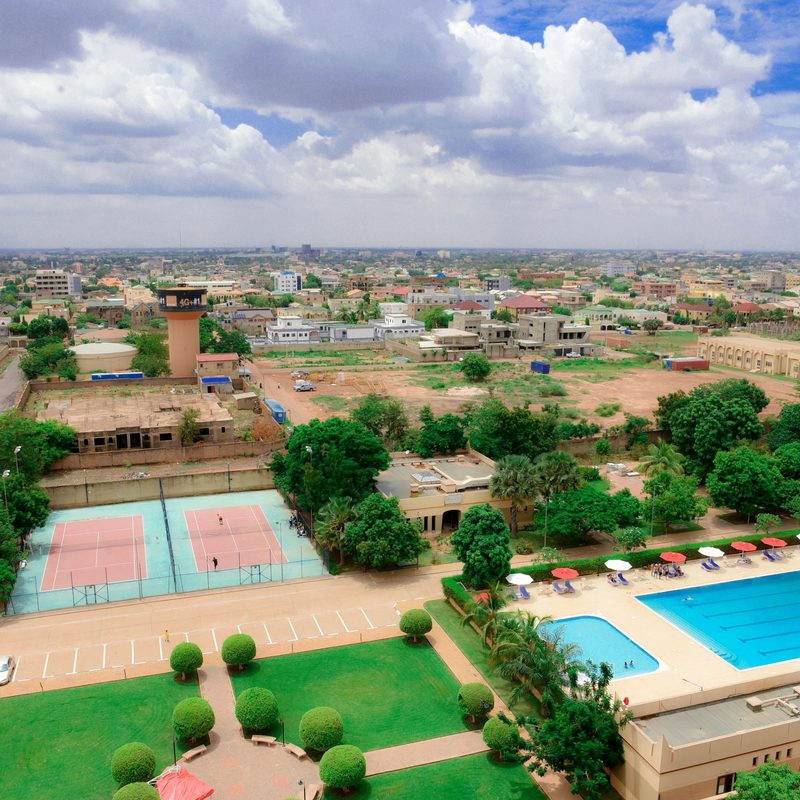
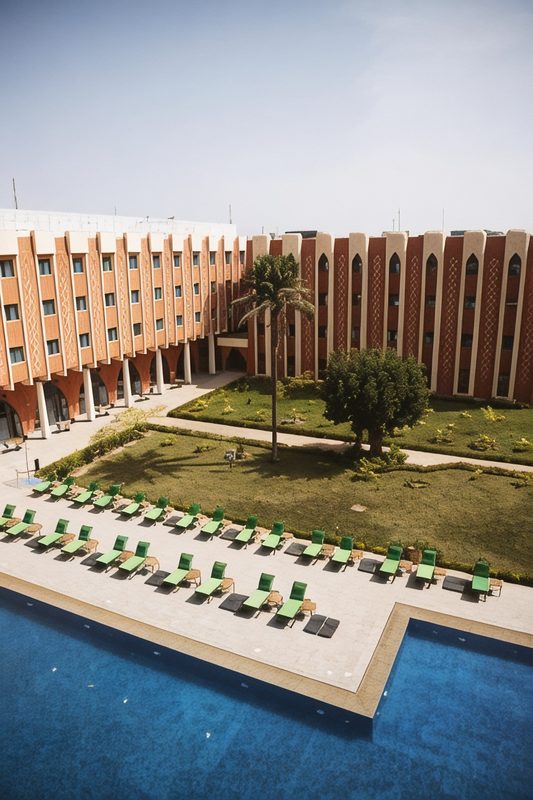
Where to Stay in Ouagadougou in June
Hand-picked hotels across price tiers for June travellers.
Packing Checklist
Bookmark this page — your progress is saved between visits
Need the full list with shopping links?
Climate-specific gear, brand recommendations, and what to leave at home.
View Ouagadougou Packing List →Essential Tips
Insider knowledge and common pitfalls to avoid
Insider Knowledge
The best time for outdoor activities in June is between 6 a.m. and 10 a.m. By mid-morning the heat builds toward the daily peak. By 3 p.m. the sky darkens for the afternoon squall. Locals plan their errands and social visits around this rhythm. You should too. The hour after the rain stops, around 5 or 6 p.m., is the second golden window. The air cools. The dust is washed away. The maquis start firing up their grills.
French is the official language. Mooré is what Ouagadougou speaks. Learn five phrases. Start with 'ne y beogo' (good morning) and 'barka' (thank you). This changes every interaction. Vendors relax. Prices soften without you asking. People who were guarded become warm. The shift is immediate and unmistakable.
Do not drink the dolo at a maquis unless your stomach is adapted to the local water. It is brewed with unfiltered water and fermented in open vessels. The taste is interesting, thick and sour with a yeasty tang. The gastrointestinal consequences for a first-time visitor can ruin two days. Bottled beer or bissap, the deep-red hibiscus tea served cold, are safer choices. They still feel local.
Ouagadougou runs on two-wheeled transport. Motos, the small motorcycle taxis, are the fastest way across town. They cost a fraction of a car taxi. They are also the most dangerous mode of transport in the city. Safety equipment is minimal. Traffic is aggressive. If you take one, insist on a helmet. Agree on the fare before mounting. Avoid them entirely after dark or during rain. For longer trips, a car taxi or pre-arranged driver is the call.
Avoid These Mistakes
Do not underestimate how quickly a June afternoon storm turns roads impassable. Travellers schedule a 3 p.m. museum visit on the far side of town. They find themselves stranded for two hours in a flooded intersection with no available taxi. Plan your afternoon indoors or within walking distance of your accommodation by 2 p.m. You will not get caught.
Do not skip antimalarials because Ouagadougou feels urban. It is urban. It is also a Sahelian city at the start of rainy season. Open drainage channels and standing puddles after every storm create abundant mosquito breeding habitat. Malaria is not a rural-only disease here. Falciparum malaria, the dangerous strain, is the predominant type in Burkina Faso.
Do not arrive without a yellow fever vaccination certificate. Burkina Faso requires proof of yellow fever vaccination for entry. Enforcement is not theoretical. You will be turned around at immigration or vaccinated on the spot under conditions you do not want. Get the jab at least ten days before travel. It takes that long to become effective.
Ready to plan your trip to Ouagadougou?
Now that you've got the research covered, here's where to go next.
Explore More Activities in Ouagadougou
Didn't see anything interesting yet?
Browse Viator's full catalog of tours, day trips, food experiences, and private guides in Ouagadougou.
See All Ouagadougou Tours on Viator