
Things to Do in Ouagadougou in January
January weather, activities, events & insider tips
Low Season · Budget Friendly
January Weather in Ouagadougou
Long-run averages for January
92°F (33°C)
High Temp
62°F (17°C)
Low Temp
0.0 inches (0 mm)
Rainfall
20%
Humidity
9
Sunny-Day UV
⚠ Harmattan dust from the Sahara reduces visibility and degrades air quality throughout January. On heavy-haze days the sky turns milky beige. Fine grit coats surfaces within hours. Travelers with respiratory conditions should carry appropriate medication. Limit outdoor time on the worst days. These typically hit mid-morning through mid-afternoon when the dust load peaks.
⚠ Extreme diurnal temperature swings of up to 16°C (29°F) catch visitors unprepared. The midday peak hits 33°C (92°F). The pre-dawn low drops to 17°C (62°F). Layering is essential. You may start the day in a fleece. By 10 AM you will strip to a single layer. You will need that fleece again after sunset.
Is January Right for You?
Weigh the advantages and considerations before booking
Advantages
- + Zero rainfall and bone-dry skies mean every outdoor plan holds without a backup. January is the driest stretch in a city that gets hammered by monsoon from June through September, so you can walk Ouagadougou's laterite-red streets from the first dawn prayer call to the last round of dolo at the maquis without once checking a forecast.
- + Nighttime temperatures drop to 17°C (62°F), the coolest Ouagadougou gets all year. After sunset the air carries the smoky sweetness of charcoal-grilled poulet bicyclette drifting from neighbourhood maquis, and the evening breeze makes sitting outside for hours comfortable, something the city's punishing March-to-May heat, when nights barely dip below 27°C (81°F), never allows.
- + The Harmattan's diffused light turns Ouagadougou's architecture into a photographer's study in warm ochre and sienna. Suspended Saharan dust softens shadows and stretches golden hour by thirty minutes on either end of the day, giving the Independence Monument and the Cathédrale de l'Immaculée Conception a quality of light that the razor-sharp wet-season sun washes out entirely.
- + January sits well before FESPACO, the Pan-African Film and Television Festival that typically fills Ouagadougou's accommodations in late February and March during odd-numbered years. In 2027, a FESPACO year, January lets you experience the city at its most accessible, with better room availability and a creative pre-festival energy as filmmakers, musicians, and artists drift into town to prepare.
Considerations
- − The Harmattan coats everything. Saharan dust rides the northeast wind and leaves a fine grit on your skin, in your throat, and across every surface by midday. Visibility drops on heavy-haze mornings to a milky beige blur, and anyone with asthma or respiratory sensitivity will feel the particulate load, between 10 AM and 3 PM when the air is driest and the dust thickest.
- − Daytime heat still hits 33°C (92°F) and the sun is relentless despite the haze, with a UV index of 9 that will burn unprotected skin in under twenty minutes. The extreme dryness at 20% humidity amplifies it since there is no moisture to moderate the sensation. Walking the Grand Marché at noon feels like standing inside a kiln with the door cracked open.
- − Burkina Faso's security situation requires serious advance planning. While Ouagadougou itself is considerably more stable than the country's northern and eastern provinces, the broader context means limited tourist infrastructure, few organised group tours, and the necessity of consulting current government travel advisories from your home country before committing to dates. This is not a destination where you wing it.
Best Activities in January
Top things to do during your visit
Parc Bangr-Weoogo morning walks
January's cool early mornings, when the temperature still hovers near 17°C (62°F) and the Harmattan haze filters the rising sun into copper streaks through the canopy, make this 265-hectare (655-acre) sacred Mossi forest the best place to start a day in Ouagadougou. The park sits inside the city limits but feels a continent away from the mobylette-choked boulevards just beyond its walls. Warthogs root through the undergrowth, monitor lizards sun themselves on warm rocks, and the sound shifts from the city's two-stroke engine drone to weaver birds chattering in the acacias. The dry season thins the foliage enough that you can see deeper into the forest than at any other time of year, and the ground is firm red laterite rather than the sucking mud of August. Go before 8 AM. By mid-morning the heat climbs and Harmattan dust from the adjacent road starts filtering in, and the animals retreat to shade.
Booking Tip: No advance booking needed for the park itself. For guided walks with naturalist commentary on the sacred forest's Mossi significance and its wildlife, arrange through licensed operators a few days ahead. See current options in the booking section below.
Laongo granite sculpture excursions
About 30 km (19 miles) northeast of Ouagadougou, the Laongo sculpture symposium site spreads across a field of massive granite boulders that West African and international artists have been carving since the late 1980s. In January the Harmattan light gives the stone a warmth that the wet season's harsh glare strips away, and the absence of rain means you can scramble over the formations without slipping on moss-slicked surfaces. The drive out passes through Sahelian scrubland dotted with shea trees, their bare branches sharp against the dusty sky, and the open-air gallery itself is near-silent except for wind and the occasional goatherd passing through with bells clinking on the lead animals. You will likely have the entire site to yourself. Bring water and a wide-brimmed hat since there is no shade beyond the boulders themselves, and the reflected heat off the granite by midday is punishing. Morning departures let you explore for two to three hours before the sun gets serious.
Booking Tip: Book a half-day excursion through a local operator at least three days in advance, as transport to Laongo is the main logistical challenge and there is no public transit. Check the booking section below for current guided tour options that include round-trip transport.
Grand Marché and artisan market tours
Ouagadougou's Grand Marché sprawls across the city centre and is the sensory core of the capital. January's dry conditions mean the market's narrow alleys are passable without the ankle-deep puddles that make the rainy season a slog, and the Harmattan's cooler mornings keep the intensity of the spice stalls, the indigo dye vats, and the cured leather from becoming overwhelming the way they do in April's 40°C (104°F) furnace. The scent of raw shea butter, stacked in pale yellow pyramids on wooden tables, mixes with roasting peanuts and the sharp fermented tang of soumbala, the locust-bean paste that seasons half the cooking in Burkina Faso. A separate trip to the Village Artisanal de Ouagadougou, the purpose-built artisan compound where bronze-casters pour molten metal into sand moulds and weavers work cotton on hand looms, is worth the afternoon since you watch the full production before buying. Start at the Grand Marché by 7 AM to see the wholesalers stocking up before the retail day begins, when the aisles are navigable and the vendors are less pressured.
Booking Tip: Guided market tours with a local cultural interpreter help enormously with negotiation context and navigating the warren of stalls. Book two to four days ahead through licensed operators, and see current options in the booking section below.
Moro-Naba Friday ceremony and Mossi heritage circuit
Every Friday morning at the palace of the Moro-Naba, the paramount chief of the Mossi people, a centuries-old ceremony develops that dramatises the king's symbolic departure for war and his court's persuasion to remain. It is one of the few living royal ceremonies in West Africa that has run continuously and remains open to respectful visitors. In January the dry ground of the palace courtyard raises small clouds of red dust as the horsemen and attendants move through their roles, the drums echo sharply in the low-humidity air, and the slanting morning light catches the deep indigo and saffron of the court's embroidered boubous and fez caps. Arrive by 7 AM and stand to the side with the local spectators rather than pushing forward. The ceremony lasts roughly thirty to forty-five minutes. Pair it with a visit to the Musée National du Burkina Faso the same morning to see Mossi masks and ceremonial objects that contextualise what you just witnessed.
Booking Tip: The ceremony itself is free and public, but a local guide who can explain the ritual sequence in real time transforms the experience from spectacle to understanding. Arrange one through the booking section below or your accommodation's front desk at least a day in advance.
Evening maquis circuit and poulet bicyclette
The maquis, Ouagadougou's open-air bars and grill spots scattered under neem and mango trees across every neighbourhood, are where the city lives after dark. January's cool evenings, rarely dropping below 17°C (62°F), make sitting outside for three hours not only bearable but pleasant. The smell of poulet bicyclette, the city's signature free-range chicken grilled slow over shea-wood charcoal until the skin blisters and blackens at the edges, drifts through neighbourhoods like Dapoya and Zone du Bois well before you spot the coals glowing behind a low mud-brick wall. The chicken arrives on a metal plate with raw onion rings, a sharp house mustard or pounded chili condiment, and attiéké, fermented cassava couscous that absorbs the smoky juices. Wash it down with dolo, the cloudy, slightly sour millet beer served from calabash gourds, or a cold Brakina lager. January evenings bring out live music at the larger maquis, djembe and balafon sessions that start around 9 PM and run past midnight. This is the one Ouagadougou experience no tour can replicate, because the point is to sit with strangers, eat slowly, and let the night happen.
Booking Tip: No booking needed since maquis operate on a walk-in basis. For a structured food-and-culture evening walk with context on Mossi and Burkinabè culinary traditions, check the booking section below for guided options. Ask locally which maquis have live music scheduled that night.
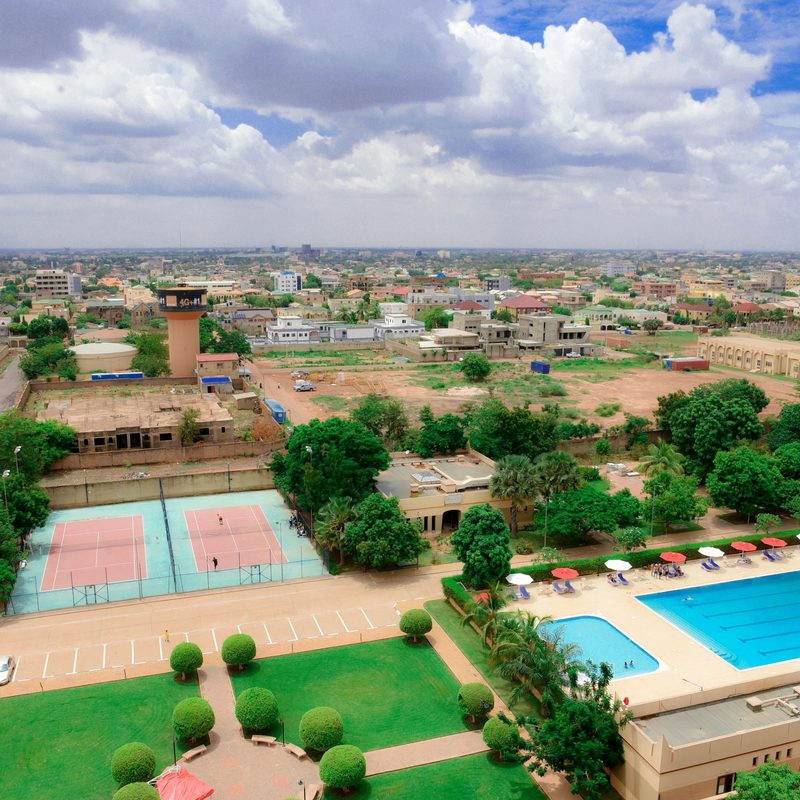
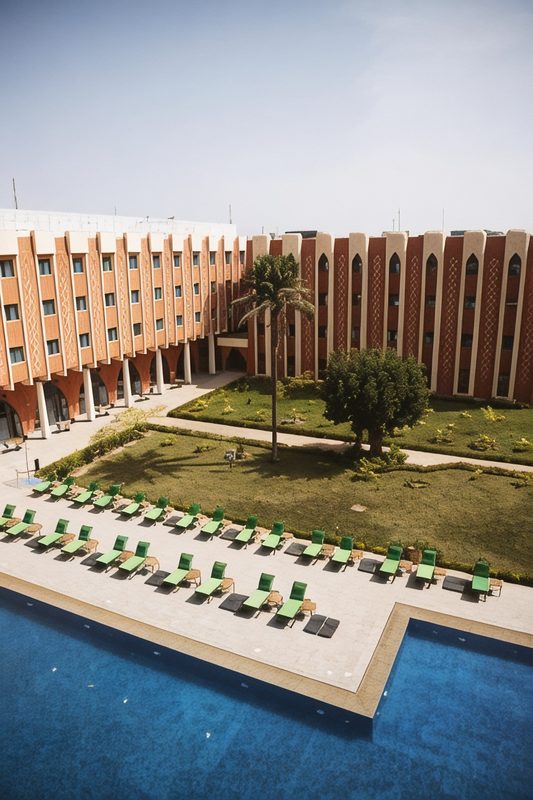
Where to Stay in Ouagadougou in January
Hand-picked hotels across price tiers for January travellers.
Public Holidays in January
Dates that affect opening hours, transport and crowds
New Year's Day
Observed nationwide as a public holiday.
Revolution Day
Observed nationwide as a public holiday.
New Year's Day
Observed nationwide as a public holiday.
Revolution Day
Observed nationwide as a public holiday.
Packing Checklist
Bookmark this page — your progress is saved between visits
Need the full list with shopping links?
Climate-specific gear, brand recommendations, and what to leave at home.
View Ouagadougou Packing List →Essential Tips
Insider knowledge and common pitfalls to avoid
Insider Knowledge
The real Ouagadougou runs on mobylettes, the buzzing two-stroke mopeds that outnumber cars ten to one and weave through traffic with a logic that looks chaotic but is entirely predictable once you learn it. Taxis exist but they are slow, scarce, and take circuitous routes. If you are comfortable on two wheels, arranging a mobylette through your accommodation is how residents move, and it halves your transit time. January's dry, firm roads make this the safest month to try it. Do it.
Dolo, the traditional millet beer, is brewed fresh by dolotières, women who mark their stalls with an upturned calabash on a pole outside their compound walls. In January the cooler temperatures mean the dolo ferments more slowly and tends to come out slightly less sour and more rounded than the tart wet-season batches. If you see a queue at a dolotière's stall in the late afternoon, join it. The best batches sell out by sundown. Arrive early.
French is the administrative language but Mooré is what Ouagadougou speaks at street level. Learning five phrases will change every interaction: 'ne y beogo' for good morning, 'ne y windiga' for good afternoon, 'barka' for thank you, 'laafi bala' to ask how someone is, and 'laafi' to reply that you are well. People visibly soften when a visitor makes the effort, and at the Grand Marché it shifts the entire dynamic of a negotiation. Try it.
Ouagadougou's January cultural calendar runs on neighbourhood networks, not international listings. Small concerts at maquis, theatre rehearsals ahead of the February FESPACO festival, art exhibitions in spaces along Avenue de la Liberté, none of it appears online. Ask at your accommodation's front desk each morning what is happening that evening. The informal word-of-mouth network is the only reliable programme, and missing it means missing the city's creative life entirely. Ask daily.
Avoid These Mistakes
Avoid scheduling outdoor exploration between 11 AM and 3 PM. January's 33°C (92°F) daytime peak combined with near-zero humidity and heavy Harmattan dust makes midday miserable and potentially dangerous. Ouagadougou shuts down during these hours for a reason, with shuttered market stalls and empty streets. Follow the local rhythm: early morning activity, a long midday rest indoors, then resume in the late afternoon when shadows lengthen. Stay inside.
Never assume the Harmattan haze is cloud cover and skip sun protection. The suspended dust dims visible light but lets UV through almost undiminished. First-time visitors regularly burn badly on their first full day because the sky looks overcast and the heat feels dry rather than scorching. Apply sunscreen before leaving your room, not when you start feeling the sting, because by then the damage is already hours old. Apply early.
Never drink too little water because you do not feel sweaty. At 20% humidity your perspiration evaporates instantly, masking how much fluid you are losing. By the time you register thirst in Ouagadougou's January air you are already dehydrated. Carry water constantly and drink on a schedule, at least every thirty minutes during outdoor activity, not on thirst alone. Oral rehydration salts in your evening water help replace the minerals you lose without realising it. Drink often.
Ready to plan your trip to Ouagadougou?
Now that you've got the research covered, here's where to go next.
Explore More Activities in Ouagadougou
Didn't see anything interesting yet?
Browse Viator's full catalog of tours, day trips, food experiences, and private guides in Ouagadougou.
See All Ouagadougou Tours on Viator